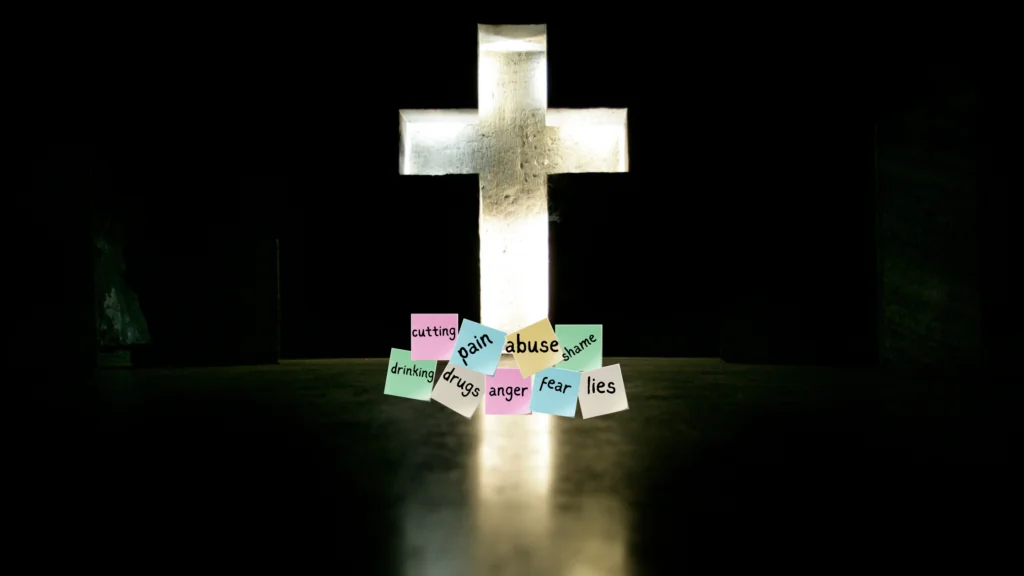
Leave it at the cross and don’t pick it back up! I’ve heard that more than once from the pulpit. For me, the problem was that I didn’t know how to do that. No one explained how you actually leave it at the cross and don’t get involved in it again.
While no scripture explicitly states, “leave it at the cross,” it likely refers to Matthew 11:28: “Come to me all who are weary, and I will give you rest.” Or perhaps it’s Psalm 55:22 “Cast your cares on the Lord, he will sustain you; He will never let the righteous be shaken.” In other words, whatever your problems are, they need to be given to Jesus and not picked back up. But how do we actually do that?
My Revelation
Several years ago, I had a dream where I was threatened with a severe sickness. While I knew the Lord was showing me what could happen, I also understood that it didn’t have to happen. So I asked the Lord a question: Does it have any right or reason to attack me? And He answered. I was carrying unforgiveness against someone.
In this case, it was more than one person, as it likely is with most of us. I had no idea how to leave that at the cross. So I had to keep asking the Lord questions and waiting for His answers. The first thing He told me was to bind that thing so that it would not come near me. I suppose I could have left it at that, but I didn’t know how long it would be bound for. If I were doing something that was inviting the illness, then that behavior would continue, and I would be asking for more problems.
Please understand me, just because you have an illness does not necessarily mean you have done something to cause it. In this world, many things cause disease, and sometimes it’s our own behaviors. Those things are scientifically proven.
Breaking Ties: aka Leaving it at the Cross
The Bible uses three different words for repent or repentance. The most common form is the word “metanoeo,” which means: “To change one’s mind and purpose, to turn from sin to God.” It’s not just about being sorry or remorseful for your actions or behaviors; however, those things are often attached to it. Repentance is turning from those behaviors. But how do we do that without picking them up again?
The first thing we need to do is break ties with our behavior. Along my journey, the Lord told me to repent for harboring unforgiveness toward specific people. I did that in the form of a short prayer that went something like this:
“Lord, I repent for holding unforgiveness against (name the person). I cut it off from my life and decree that it can no longer operate. I ask you to bring in Your healing to those wounds.”
I didn’t understand it at the time, but that was leaving it at the cross. Once I confessed that to God, he was faithful to take it.
How do I know if it worked, and what if it doesn’t seem to have?
When I began working through these things with repentance, I realized that the person I was upset with no longer had a hold over me. I could see them in public, and no bad feelings or animosity came up. Please understand that if this involves any abuse, you are not required to reconnect with that person. It would probably be best if you stayed away. If you are holding unforgiveness against someone who has died, it will work as well.
Did it Work?
If you’ve done this and you don’t feel like it worked because you would cheerfully choke them if they were standing in front of you, that means there is more than one thing going on. Unforgiveness rarely shows up by itself. The Bible talks about the concept of a threefold chord, and that will be the subject of my next blog.
Until the next time under the palm, be blessed!