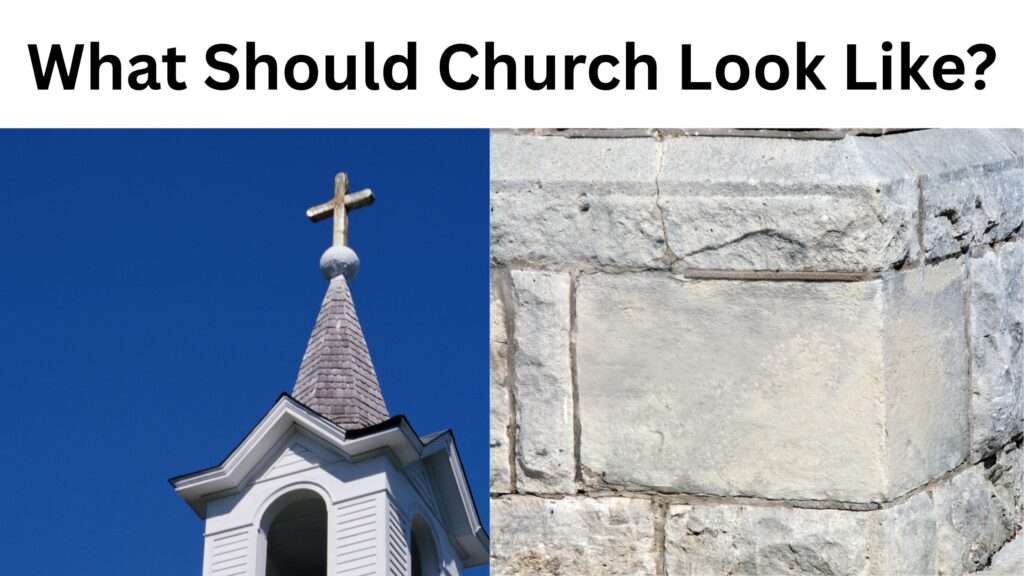
Most of us have been to Church at some point in our lives. If not, we’ve likely seen what Church looks like on television or in a movie. There’s usually someone leading the ceremony, whether it be a priest or a pastor. They might be in long, flowing robes or wearing jeans. Most likely, we have definitely identified them as the leader. But is this the way church government should be?
Top-Down Model
Most of us likely think that we should go to Church, listen to what the leader is teaching, and then go home. Maybe we’re involved in some type of group, such as a nursery, a Christian education for kids, a men’s group, a women’s group, or maybe the fellowship hour after Church. Shouldn’t there be more to this? What about our giftings? Where do they fit in? What did Church look like in the early days?
If we really want to understand church structure, we have to look to the Bible. What most of us have known is one leader with the possibility of an associate pastor or two. I call this the top-down model, which looks much like an organizational chart for a business. You start with the people at the top. Usually, there’s only one person below there; there are probably a couple more, and below them, maybe 10 more, and below them is the congregation.
Would it surprise you if I said this is not what the Church is supposed to look like? The modern-day Church is a model of civil government, church government. This model is biblical. But it is for the governing of the people, not for the service of God.
Part of Moses’ duties included judging the people – meaning, he judged disputes. He spent the entire day doing this until his father-in-law, Jethro, showed up.
Exodus 18:17-26 is the advice Jethro gives Moses:
17 Moses’ father-in-law replied, “What you are doing is not good. 18 You and these people who come to you will only wear yourselves out. The work is too heavy for you; you cannot handle it alone. 19 Listen now to me and I will give you some advice, and may God be with you. You must be the people’s representative before God and bring their disputes to him. 20 Teach them his decrees and instructions, and show them the way they are to live and how they are to behave. 21 But select capable men from all the people—men who fear God, trustworthy men who hate dishonest gain—and appoint them as officials over thousands, hundreds, fifties and tens. 22 Have them serve as judges for the people at all times, but have them bring every difficult case to you; the simple cases they can decide themselves. That will make your load lighter, because they will share it with you. 23 If you do this and God so commands, you will be able to stand the strain, and all these people will go home satisfied.”
24 Moses listened to his father-in-law and did everything he said. 25 He chose capable men from all Israel and made them leaders of the people, officials over thousands, hundreds, fifties, and tens. 26 They served as judges for the people at all times. The difficult cases they brought to Moses, but the simple ones they decided themselves.” (NIV)
Do you see it? Moses chose trustworthy men and appointed them over hundreds, fifties, and tens –it is a model for civil government, and that is the same model most churches use today.
Bottom-Up Model
What should the Church look like today, and what did the Church look like when the first apostles were on the earth?
Let’s look at Ephesians 2:19-22:
“Consequently, you are no longer foreigners and strangers, but fellow citizens with God’s people and also members of his household, 20 built on the foundation of the apostles and prophets, with Christ Jesus himself as the chief cornerstone. 21 In him the whole building is joined together and rises to become a holy temple in the Lord. 22 And in him you too are being built together to become a dwelling in which God lives by his Spirit.” (Italics and underline are mine: NIV).
I call this the bottom-up model. Jesus is the cornerstone – not the steeple. Cornerstones are the first carefully laid foundational stones. It must be square and correctly aligned before the other stones are set. Jesus is the “stone” that has been wisely put in place to align the rest of the foundation of the Church correctly. According to the above scripture, the apostles and prophets are important aspects of the foundation, along with evangelists, pastors and teachers:
11 So Christ himself gave the apostles, the prophets, the evangelists, the pastors and teachers, 12 to equip his people for works of service, so that the body of Christ may be built up 13 until we all reach unity in the faith and in the knowledge of the Son of God and become mature, attaining to the whole measure of the fullness of Christ. (Eph. 4:11-12)
Or, in other words, those who are the most mature in their faith lead by serving. They are at the foundation and are here to serve – not to be served, and to build the Kingdom of God, which exists outside the walls of the Church.
What's Next?
What’s next? Glad you asked! In the next several blogs, I will be writing about the responsibilities of apostles, prophets, pastors, evangelists, and teachers, and how they are to serve the Church.
Until next time under the palm, be blessed!